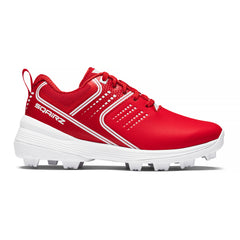
For years, footwear choices leaned heavily toward comfort. Soft shoes felt protective and a lot of times cushion felt like the safer option. The research behind platform firmness gave us a clearer picture of what is really happening once the game speeds up.
Why Shoe Firmness Changes the Way Players Move
You can read the full study here. What follows is our breakdown of what it actually means for baseball players, coaches, and parents.
The study focused on footwear firmness, known as durometer, and how it affects stability at the ankle. Softer materials compress more when force hits the ground. That compression creates movement inside the shoe before the platform stabilizes.
In real baseball movement, that delay matters. The foot sinks slightly before it settles. The ground response arrives later than the body expects. That split second forces the body to adjust instead of attack.
How the Ankle Ends Up Carrying the Load
When the platform moves, stability shifts to the ankle and subtalar joint. The study showed that softer footwear increases the amount of muscular control required to keep the body centered. Those muscles are working earlier and more often.
That extra work shows up as constant micro-adjustments. Pitchers feel it when the block foot never feels firm and even hitters will feel it when energy fades just before contact. Fielders will also feel it when the first move feels reactive instead of decisive.
The body is doing more just to stay upright.
Balance Starts Slipping Long Before Anyone Falls
One of the clearest findings in the study was the increase in postural sway when softer platforms were used. In simple terms, the body moves more before it stabilizes.
In baseball, that movement shows up as hesitation. The timing window shrinks making confidence drop. The ankle absorbs stress because it keeps correcting instead of resting in a stable position.
Most players never associate those feelings with footwear. They just know something feels off.
Why This Research Makes Sense for the GFP™ Base

When the GFP™ base was created, the focus was on how the foot feels the moment it hits the ground. Players want a base that settles quickly so they can move without thinking about it.
That meant a platform with consistent firmness and a roomier shape that lets the foot spread naturally. When the foot has space to engage the ground, balance feels easier to control.
A stable base keeps the ankle quiet and lets energy move upward without early loss. Reading this research now puts clear language around why players describe the same feeling again and again.
The base just feels solid.
Why Coaches and Parents Notice It First
Players typically play through soreness and adjust without saying much, especially when nothing feels bad enough to stop them outright. What changes is how long those small aches hang around and how often the same areas keep getting attention.
Parents start noticing that ankles need more taping than they used to. Coaches see players wearing down earlier in games or moving a little more cautiously late in practice. The body never looks broken, but it never quite looks settled either. Over time, confidence shifts and movement tightens because something underneath does not feel reliable.
That is often where the real story starts.
Bringing It Back to the Game

If you’re playing on an unstable base, you’re giving up more than you should. Your body ends up doing extra work on every move, and that’s when soreness starts sticking around and small issues turn into regular problems over a season.
GFP™ cleats give you a base that stays solid under load and a roomier platform that lets your toes move the way they’re supposed to. When your feet are supported the right way, your body takes less of a beating and your movement feels easier to trust.
That’s one of the simplest ways to take care of yourself while playing the game at a high level.