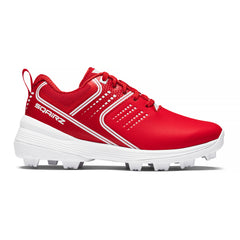
Baseball season is back, and plenty of players are still dialing in their gear. If you waited until the last minute on cleats, you’re definitely not alone.
Honestly, the timing can work in your favor. Early practices are the perfect window to get comfortable with new footwear. SQAIRZ GFP™ cleats don’t really need a traditional break-in period, but players do notice the difference right away.
That’s exactly why now is the perfect time to break in a new pair of cleats.
Your Body Is Already Adjusting
The first few weeks of practice create a spike in workload. Your legs get heavier and hips get tighter. That adaptation period is normal. Your muscles are rebuilding tolerance for sprinting, cutting, and rotating at game speed. When new cleats enter the picture during this phase, your body integrates them into that process.
Waiting until mid-season creates a different scenario. Introducing new footwear at that point forces small adjustments that show up in subtle ways. A half-step late out of the box or a slightly rushed throw. A swing that feels off even when nothing obvious is wrong.
Cleats should feel invisible by the time games start mattering most.

What Parents Should Watch in the First Month
Parents often notice changes before players say anything. Watch recovery. Is your athlete bouncing back quickly after practice, or are they dragging through the week?
Early fatigue patterns can reveal whether the foundation is helping or fighting the workload. The goal during this phase is consistency and to have a growing confidence with each practice.
Why Mid-Season Cleat Shopping Rarely Ends Well
Buying cleats mid-season usually follows discomfort. Blisters. Loss of traction. Nagging foot pain.
New cleats need reps before they feel natural. They need sprints and ground balls, especially bullpens and batting practice swings. That learning curve should happen in March, not during a stretch of five games in seven days.
No player wants to be thinking about their feet in the middle of a tight inning.

How GFP™ Changes the Foundation
At this point you should know that the foot is the first point of contact in the kinetic chain. When that connection is stable, energy transfers more efficiently up the body.
SQAIRZ GFP™ cleats were designed around that reality. The roomier forefoot allows toes to spread naturally during key baseball actions:
-
Planting into a swing.
-
Driving off the mound.
-
Pushing laterally in the field.
-
Exploding out of the box.
When toes can engage the ground properly, balance improves. That sense of control builds confidence. And when an athlete trusts their base, decision-making speeds up.

What the Numbers Have Shown
Testing began with a simple question. What changes when the foundation changes?
Five-yard sprint times shifted first. Professional athletes improved by roughly two-tenths of a second. Collegiate players gained around three-tenths. High school athletes approached four-tenths. In baseball, that difference is visible.
Throwing velocity followed a similar pattern. Across levels, average gains approached 1.8mph. Professionals saw increases near 2.7mph. Collegiate athletes approached 3.0mph. Velocity typically moves slowly unless mechanics change significantly. A more stable base supported cleaner sequencing and stronger force transfer.
Exit velocity moved as well. Most athletes tested increased ball speed. Several jumped more than 3mph. Harder contact travels farther and changes defensive positioning.
Balance improvements showed up during movement evaluations. Pivots felt more controlled. Lateral jumps were stronger. Coaches noticed steadier footwork in the box and on the mound.
Those improvements came from strengthening the starting point.

Where It All Adds Up
As data accumulated, adoption grew. GFP™ moved from development fields to professional clubhouses. Players at every level began making the switch because they felt the difference in stability and control.
Breaking in cleats now gives athletes time to build that edge into their game before standings tighten and games carry weight. Your cleats should be part of that foundation, not a late-season adjustment.