


With the pickleball boom came something less talked about also started appearing fast… injuries. And surprisingly, many of them don’t happen when players are at peak season fitness. They show up right before it.
Late winter into early spring tends to be the quiet danger zone.

The Pre-Season Ramp-Up Problem
Winter play rarely stays consistent, unless you are one of the lucky ones with an indoor facility near you. Even then, the cold weather and winter vacations prevent consistent movement we are used to in the warmer months.
When things pick back up in spring, your body may not adjust well. Muscles that haven’t handled frequent lateral movement tighten and tendons lose some elasticity. Your stabilizer muscles around the foot will need time to re-engage.
That first 60 degree day will have us sprinting to the neighborhood courts without warming up because we’re eager to play again. Most days nothing happens, but occasionally one awkward plant or sudden pivot turns into a setback. When activity increases faster than adaptation, you’ll notice some small issues start appearing.
Footwear Decisions Show Up Early
Early-season footwear choices often come down to convenience. You bring older shoe back into rotation or grab your running shoes because they feel familiar. Some players keep whatever they wore last season without thinking about increased court time ahead.
Pickleball stresses the body in specific ways. Constant lateral pushes. Sudden stops. Short explosive bursts on hard surfaces. Shoes designed mainly for forward motion don’t always support that pattern well.
When stability at ground level drops, the rest of the body compensates. Ankles absorb more torque and over time that shows up as soreness, fatigue, or injury.

Injury Costs Are Climbing With Participation
Healthcare analysts estimated pickleball injuries generated between $250 million and $500 million in medical costs in one year alone. Emergency visits, outpatient care, procedures, and rehab all factor into that number. While doctors are getting paid, you are texting the groupchat that you’ll be out for 4 weeks.
Players over sixty account for a large portion of injuries, though younger competitive players are appearing more often as pace and intensity increase. Ankles, knees, feet, and wrists carry the highest risk because of the sport’s stop-start movement and hard playing surfaces.
Awareness is improving, but reparation still lags far behind.

Stability Changes How the Body Responds
Injury prevention rarely comes down to one factor. Consistent play schedules help and of course proper warmups improve reaction and control.
What you may not know is that footwear influences all of it.
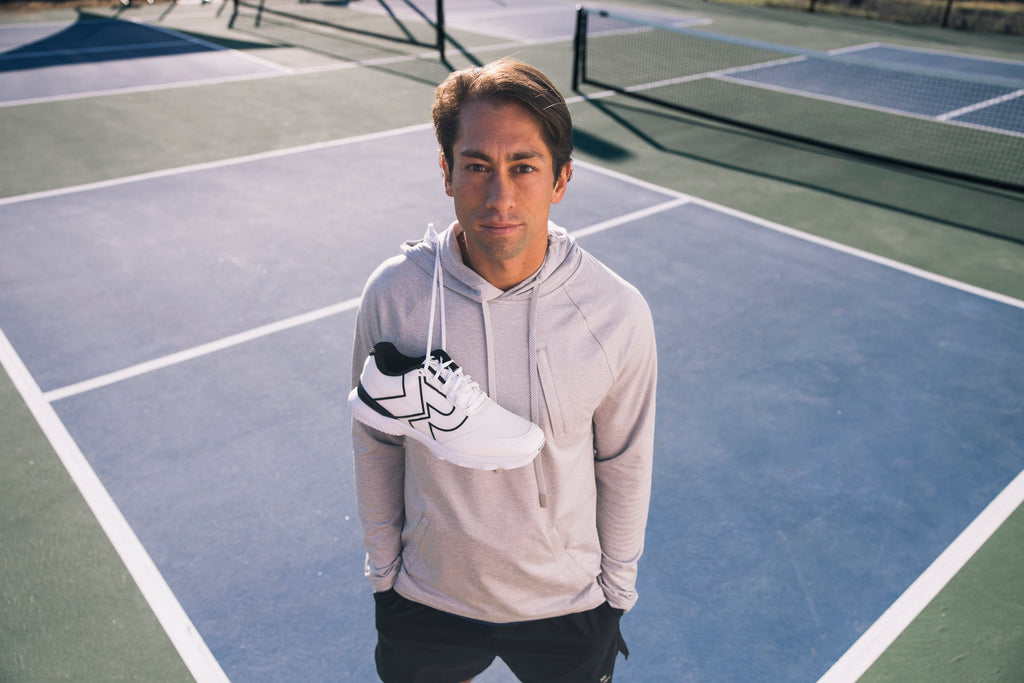
We designed the XRZ™ by watching real pickleball games and studying the movements and how the body reacts. The stops, the lunges, the “oh no” toe jams, the ankle-saving recoveries. Every part of this shoe has a purpose tied directly to how you move on court.
Roomier Toe Box = fewer toe-jamming horror stories
You know the one. Sprint for a ball, slam on the brakes, toes hit the front of the shoe. Not fun. The extra space lets your toes spread naturally so balance improves and those painful forefoot jams become far less likely.
Low-to-the-ground platform = real balance, not wobbly cushion
More ground contact means more control. Independent balance testing showed players wearing XRZ™ improved stability by an average of 15.71% compared with major athletic brands, with some seeing gains as high as 33%. Our base feels stable, your joints don’t have to overcompensate.
Smart Traction™ Outsole = grip when you need it, glide when you don’t
The traction pattern is tuned specifically for court surfaces so you avoid that knee-jarring slip while still moving freely during fast exchanges.
NRG-Foam™ midsole = impact protection without the mush
This midsole absorbs shock while returning energy so you stay comfortable and responsive deep into long sessions.
GripSync™ removable insole keeps you planted
No sliding inside the shoe mid-rally. That locked-in feel helps reduce friction, hot spots, and those tiny alignment shifts that add up over long sessions.
Sta-Put laces stay tied so you stay focused
No mid-match double knots. No tripping on loose loops during a scramble point. Tie them once and get back to reading your opponent instead of your footwear.
Getting Ahead of the Season
If you want to start strong this season, ease into it a bit. Going from winter downtime straight into three hours a day, seven days a week sounds ambitious until your body disagrees. Build back gradually and warm up before matches instead of using the first game to loosen up. A little prep now usually means a lot more uninterrupted court time later.
And Seriously… Don’t Grab Your Running Shoes
Pickleball isn’t forward-motion cardio. It’s cuts, stops, pivots, recoveries. Running shoes weren’t built for that, which is why so many early-season tweaks start at ground level. If you’re stepping back on court this spring, give your feet something designed for how you actually move. XRZ™ was built for pickleball so you can focus on winning points instead of explaining to your friends why you’re suddenly “resting.”


